Astronomical Milestones: Celebrating the Unique Anniverses of Our Celestial Journey
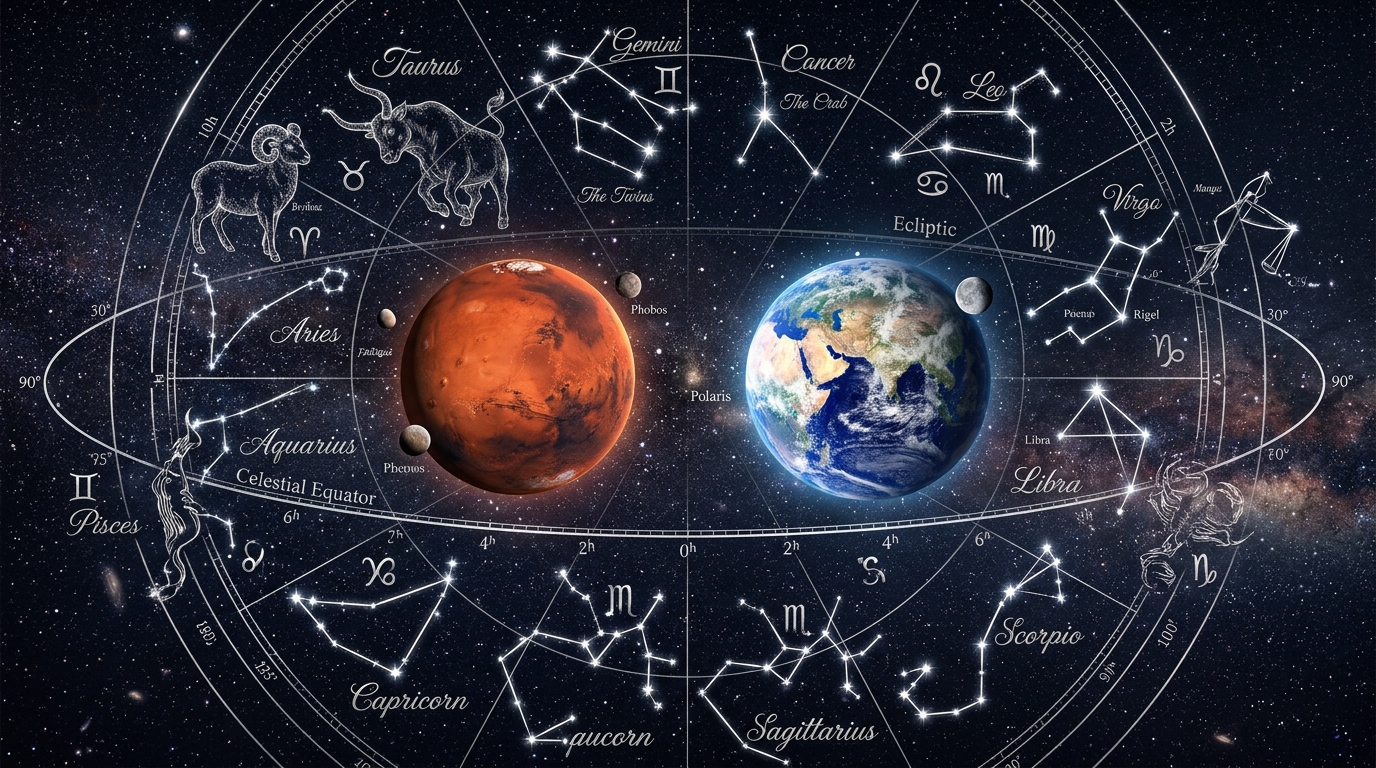
Astronomical Milestones: Celebrating the Unique Anniverses of Our Celestial Journey
Every single year, on a specific date, you gather with friends, light candles, blow them out, and celebrate another year of life. This is your standard solar birthday—a beautiful, ancient ritual marking one completed revolution of the planet Earth around our parent star.
But why stop at Earth?
Our planet is merely one of eight magnificent worlds spinning in a grand orbital dance around the Sun. Each of these planets possesses its own orbital period, its own unique velocity, and its own seasonal rhythms. Together, they form a celestial choir of alternative time scales, each offering us a unique, mind-expanding way to measure our lifespan.
In this celebratory guide, we explore the concept of Planetary Birthdays (or "Anniverses"). We look at the fascinating physics of planetary years, detail how to calculate your age across the Solar System, and discover how expanding our calendar coordinates can infuse our lives with a deep sense of cosmic wonder.
Part I: The Physics of Planetary Years (Kepler’s Third Law)
To understand why planets have different year lengths, we must look to the foundational laws of orbital mechanics. In the early 17th century, German astronomer Johannes Kepler formulated his three laws of planetary motion.
Kepler's Third Law (The Law of Harmonies) describes the precise mathematical relationship between a planet's distance from the Sun and its orbital period:
$$T^2 propto a^3$$
Where $T$ is the planet's orbital period (year length) and $a$ is its semi-major axis (average distance from the Sun). This means that as a planet's distance from the Sun increases, its year length increases exponentially.
This exponential increase is driven by two physical factors: 1. Greater Distance: Planets further out have a much larger physical circumference to traverse. 2. Slower Orbital Speed: Due to the weakening of solar gravitational pull, distant planets travel at a much slower speed. While Mercury zooms around the Sun at 47.4 km/s, distant Neptune lazily orbits at a mere 5.4 km/s.
| Planet | Distance from Sun (AU) | Average Orbital Speed | Year Length (Earth Days/Years) | | :--- | :--- | :--- | :--- | | Mercury | 0.39 AU | 47.4 km/s | 87.97 days | | Venus | 0.72 AU | 35.0 km/s | 224.70 days | | Earth | 1.00 AU | 29.78 km/s | 365.25 days | | Mars | 1.52 AU | 24.1 km/s | 1.88 Earth Years | | Jupiter | 5.20 AU | 13.1 km/s | 11.86 Earth Years | | Saturn | 9.58 AU | 9.7 km/s | 29.45 Earth Years | | Uranus | 19.22 AU | 6.8 km/s | 84.01 Earth Years | | Neptune | 30.05 AU | 5.4 km/s | 164.79 Earth Years |
Part II: Embracing Inner Planetary Birthdays (Mercury & Venus)
If you are feeling like Earth years are passing too quickly, or if you simply love a good reason to celebrate, look to the inner planets: Mercury and Venus. Because they are close to the Sun, their orbits are incredibly fast, offering you frequent milestones.
Mercury: The Swift Messenger Mercury orbits the Sun in a mere 87.97 Earth days (less than 3 months). * If you are 30 Earth years old, you are a senior citizen of 124.5 Mercury years! * Celebrating a Mercury birthday is a wonderful exercise in micro-milestones. It occurs roughly every three months, offering you a periodic opportunity to pause, reflect, set quarterly goals, and celebrate your swift transit through space.
Venus: The Radiant Morning Star Venus completes an orbit in 224.70 Earth days (roughly 7.4 months). * A 30-year-old on Earth has completed 48.7 Venusian orbits. * Venus is named after the Roman goddess of love, beauty, and harmony. Celebrating your Venusian birthday can be dedicated to personal relationships, self-care, artistic creativity, and cultivating harmony in your life.
Part III: The Outer Planetary Milestones (Mars, Jupiter, and Saturn)
While inner planetary birthdays are frequent and lighthearted, outer planetary milestones are rare, majestic, and deeply philosophical. They represent major chapters in your life.
Mars: The Crimson Pioneer Mars orbits the Sun in 1.88 Earth years (687 Earth days). * Your Martian birthdays happen approximately every two Earth years. * If you are 30 Earth years old, you have completed 15.9 Martian orbits. You are celebrating your Martian "Sweet Sixteen"! * Because Mars is associated with drive, passion, and exploration, your Martian birthdays are perfect times to evaluate your career, your personal boundaries, and your long-term ambitions.
Jupiter: The Jovian Sovereign Jupiter, the king of the planets, takes 11.86 Earth years to complete a single orbit. This long duration makes Jovian birthdays major, once-a-decade biological transitions. * Your 1st Jupiter Birthday: Age 11.8 (Transitioning into adolescence). * Your 2nd Jupiter Birthday: Age 23.7 (Entering full young adulthood). * Your 3rd Jupiter Birthday: Age 35.6 (Deepening into middle life and career maturity). * Your 4th Jupiter Birthday: Age 47.4 (Evaluating mid-life legacy). * Your 5th Jupiter Birthday: Age 59.3 (Transitioning toward elder wisdom).
A Jovian birthday is a powerful spiritual marker. It prompts us to look back on an entire decade of personal growth and transformation.
Saturn: The Ringed Teacher Saturn takes 29.45 Earth years to complete an orbit. In astrology and cultural sociology, this milestone is famously known as the Saturn Return. * Your first Saturn Return occurs between the ages of 28 and 30. It represents the physical, emotional, and social transition from youth into true adulthood. It is a time when legacy, marriage, career stabilization, and deep self-evaluation take center stage. * Your second Saturn Return occurs around age 59, representing the transition into retirement and elder statesmanship. * Witnessing your third Saturn Return (around age 88) is a rare, beautiful triumph of human longevity—a complete, three-lap masterclass of Saturn's ringed journey.
Part IV: The Ultimate Orbit: The Galactic Year
If planetary years aren't cosmic enough, we can expand our chronological perspective to the absolute macro-scale of our galaxy: the Galactic Year (or Cosmic Year).
As established in our first blog post, our Sun is not static. It is orbiting the supermassive black hole at the center of the Milky Way galaxy (Sagittarius A*), dragging the entire Solar System along with it.
A single Galactic Year—one complete lap of the Sun around the galaxy—takes approximately 225 to 250 million Earth years.
$$\text{1 Galactic Year} approx 230,000,000 \text{ Earth Years}$$
- The last time our Solar System was in this exact galactic coordinate, the very first early dinosaurs were beginning to emerge on Earth.
- It will take another 230 million years for us to return here.
In terms of Galactic Years, the entire human species has existed for only a tiny fraction of a cosmic second. An individual human being living an 80-year lifespan will experience only:
$$\text{Your Life in Galactic Years} = \frac{80}{230,000,000} approx 0.00000035 \text{ Galactic Years}$$
This humbling math reminds us that we are part of something infinitely grand. Our lives are small, but they are intrinsically woven into the fabric of a swirling, cosmic island of 100 billion stars.
Conclusion: How to Celebrate Your Celestial Journey
Using the Chronological Age Calculator's "Cosmic Cycles" panel, you can instantly find your exact age on Mercury, Venus, Mars, Jupiter, and Saturn. You can see when your next planetary birthday will occur and track your progress along these orbital paths.
To bring this astronomical awareness into your life, try this simple celebration protocol:
- Mark Your Calendar: Find your next planetary birthday in our calculator and put it in your phone.
- Align with the Planet's Theme:
- * On a Mercury Birthday, learn something new or write a letter.
- * On a Venus Birthday, express gratitude to someone you love.
- * On a Mars Birthday, take a bold physical or professional risk.
- * On a Jupiter Birthday, plan a major life audit and celebrate with a grand feast.
- Step Outside and Look Up: On the night of your planetary birthday, step outside, locate your planet in the night sky, and offer a silent toast.
By tracking and celebrating these planetary milestones, we liberate ourselves from the monotony of the standard calendar. We remind ourselves that we are not merely clocks ticking on a wall; we are celestial travelers orbiting a brilliant star, dancing in harmony with a beautiful solar neighborhood. Happy cosmic journey!