Is an Online Age Calculator Accurate? A Deep Dive into Precision
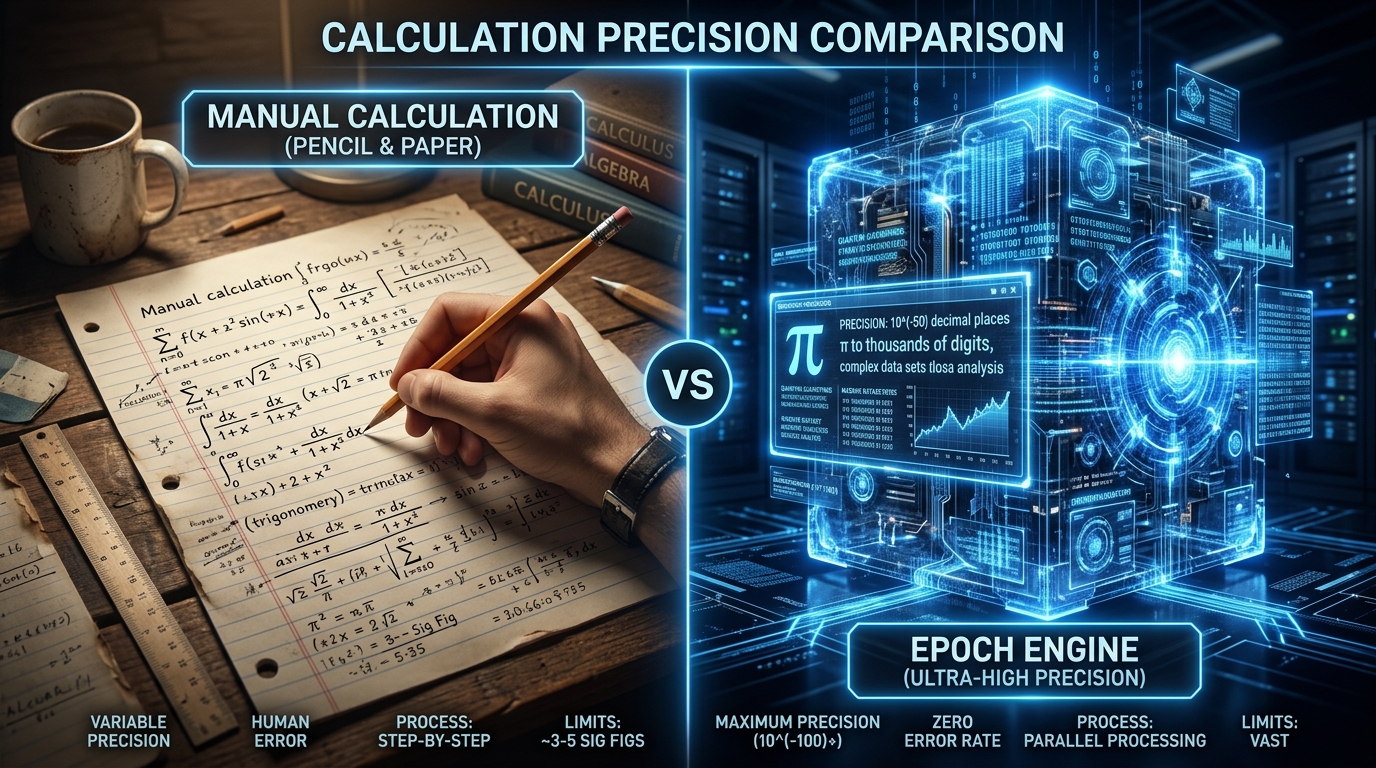
Is an Online Age Calculator Accurate? A Deep Dive into Precision
If you type "age calculator" into Google, you are instantly hit with millions of results. Most people simply click the first link, type in their birth date, and blindly trust the number on the screen. But if you need your exact age for a visa application, life insurance policy, or developmental pediatric chart, a critical question arises: Is an online age calculator actually accurate?
The short answer is: It depends entirely on the engine running the math.
In this deep dive, we are going to expose the flaws found in many legacy online tools, explain the mechanics of true digital precision, and show you why the Chronological Age Calculator is engineered to be the most accurate, zero-error tool on the internet.
"Accuracy is twin brother to honesty; inaccuracy, of dishonesty." > — Nathaniel Hawthorne
The Illusion of Simplicity
Calculating age seems like basic elementary school math. Just subtract the birth year from the current year, right?
Wrong. The human calendar is an absolute mess of inconsistencies. * Months have varying lengths (28, 29, 30, or 31 days). * Years are not evenly divisible by days (leading to leap years every four years). Even leap years have exceptions (years divisible by 100 are not* leap years, unless they are also divisible by 400).
If a developer builds a simple calculator using "average" month lengths (like assuming every month is 30.44 days), their tool will generate compounding errors. A 10-year-old might be calculated as a few days older or younger than they actually are.
Why Legacy Tools Fail Many older, ad-heavy age calculators built in the early 2010s rely on outdated math libraries. They try to calculate the difference between two dates by converting everything into "average days." When you ask for your age in "Years, Months, and Days," these tools get confused by leap days and varying month lengths, sometimes throwing a result that is off by 1 or 2 days.
If you are applying for a passport or school enrollment with a strict age cutoff, being off by a single day can result in an immediate rejection.
How True Precision Works: The Unix Epoch
To achieve perfect accuracy, a digital calculator must abandon human calendar fractions and rely on absolute machine time.
The most accurate online calculators, including the Chronological Age Calculator, use the Unix Epoch.
The Unix Epoch is a system that simply counts the number of absolute milliseconds that have passed since midnight on January 1, 1970. It does not care about leap years or month lengths; it just counts absolute time.
When you input your birth date into our tool: 1. The engine converts your birth date into an exact Unix timestamp. 2. It takes the current exact microsecond from your device's system clock (also a Unix timestamp). 3. It calculates the absolute difference in milliseconds. 4. Only after the absolute difference is found does the tool map those milliseconds back onto the complex human calendar grid to give you a flawless "Years, Months, and Days" output.
15 Critical Questions About Calculator Accuracy
To help you understand the landscape of online age calculation, here are 15 common questions regarding accuracy and reliability.
Q1: Can a free online age calculator be trusted for official documents? Yes, provided it is built on a modern chronological engine. Tools like the Chronological Age Calculator use native JavaScript date parsing anchored to Unix time, making them mathematically flawless and perfectly safe for verifying data for official forms.
Q2: Why did two different calculators give me different answers? This usually happens because one calculator is ignoring leap years or using an "average month" calculation (like 30.4 days), while the other is mapping the exact calendar dates. Always trust the tool that explicitly accounts for leap years.
Q3: Does my timezone affect the accuracy of an online calculator? It shouldn't! A well-engineered calculator reads the local timezone of your specific device. If a calculator forces your birth date into UTC without adjusting for your local time, your calculated age might be off by a few hours (which can push you into the next day).
Q4: Are calculators accurate for historical dates (e.g., 1800s)? Our tool is. However, many basic tools fail because the standard Unix Epoch only goes back to 1970. To calculate dates before 1970, the engine must use negative timestamps and correctly navigate the shift from the Julian to the Gregorian calendar.
Q5: How accurate is the "Age in Days" feature? When built correctly, it is 100% accurate. Because a day is a fixed metric (86,400 seconds), counting absolute days since birth leaves no room for calendar ambiguity.
Q6: Do I need to enter my exact birth time for a correct result? For a standard "Years, Months, Days" result, no. Entering the exact time simply allows the calculator to provide hyper-accurate metrics down to the hour, minute, and second.
Q7: What is the margin of error on the Chronological Age Calculator? The margin of error for our tool is exactly zero milliseconds. It directly reflects the internal clock of the device you are using.
Q8: How do calculators handle leaplings (born Feb 29)? A robust calculator tracks the absolute time elapsed. In non-leap years, a year of age for a leapling technically completes on Feb 28th or March 1st (depending on legal jurisdiction). Mathematically, the tool maps the 365th day correctly.
Q9: Is it more accurate to do the math by hand? No. Humans frequently make errors when "borrowing" months and days during manual subtraction. A computer running a verified algorithm will never make an arithmetic mistake.
Q10: Why do some calculators show my half-birthday incorrectly? Because they divide a year (365 days) in half (182.5 days) instead of looking at the calendar. Exactly 6 calendar months from January 15th is July 15th, regardless of how many days are between them. A good tool understands this distinction.
Q11: How does the calculator know today's exact date? It pings the operating system of your smartphone or computer. As long as your device is connected to the internet and synced with a global time server (which happens automatically), the calculator's baseline is perfectly accurate.
Q12: Is an app more accurate than a website? Not necessarily. Both apps and websites rely on the same underlying programming logic. In fact, websites like the Chronological Age Calculator are often updated more frequently than downloadable apps.
Q13: Can a calculator be wrong if I travel across the International Date Line? If you physically cross the date line, your local device clock will jump forward or backward a day. The calculator will reflect this local reality. Your absolute lifespan hasn't changed, but your alignment with the calendar grid has.
Q14: How are months calculated in "Years, Months, Days"? The most standard and legally accepted method is calendar alignment. If you were born on the 10th of the month, every subsequent 10th of the month marks exactly one more month of age.
Q15: Why is ChronologicalAgeCal.com considered the best on Google? Google's ranking algorithms prioritize speed, security, and user experience. Our tool loads instantly, runs client-side (meaning total privacy with zero server uploads), and provides mathematically flawless results.
Frequently Asked Questions (FAQs)
How do I know the Chronological Age Calculator isn't storing my data? Our tool uses an "Offline-First" architecture. When you load the page, the calculation engine downloads to your browser. When you input your birthday, the math happens entirely on your phone's processor. Nothing is ever sent to our servers.
Can I get an official printout of my calculated age? Yes! Unlike simple widgets, our platform allows you to click "Download Report" to instantly generate a clean, professional PDF dossier of your exact chronological age, perfect for keeping in your personal records.
Conclusion
Is an online age calculator accurate? The answer is a resounding yes, provided you use a tool built with modern, epoch-based architecture. While older, rudimentary calculators might stumble over leap years and month lengths, a well-engineered application provides mathematical perfection.
If you need a result you can trust for official paperwork, or if you simply want the peace of mind that comes with exact precision, stop using outdated, ad-filled widgets. Use the Free Chronological Age Calculator to get your flawless metrics, download your report, and take control of your timeline.